



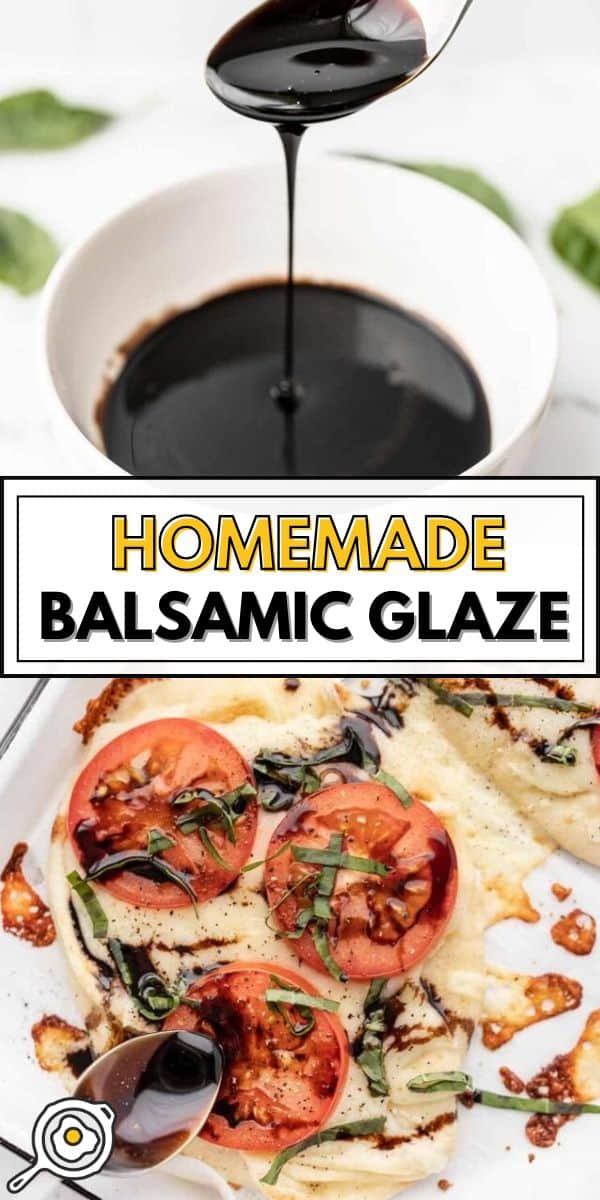
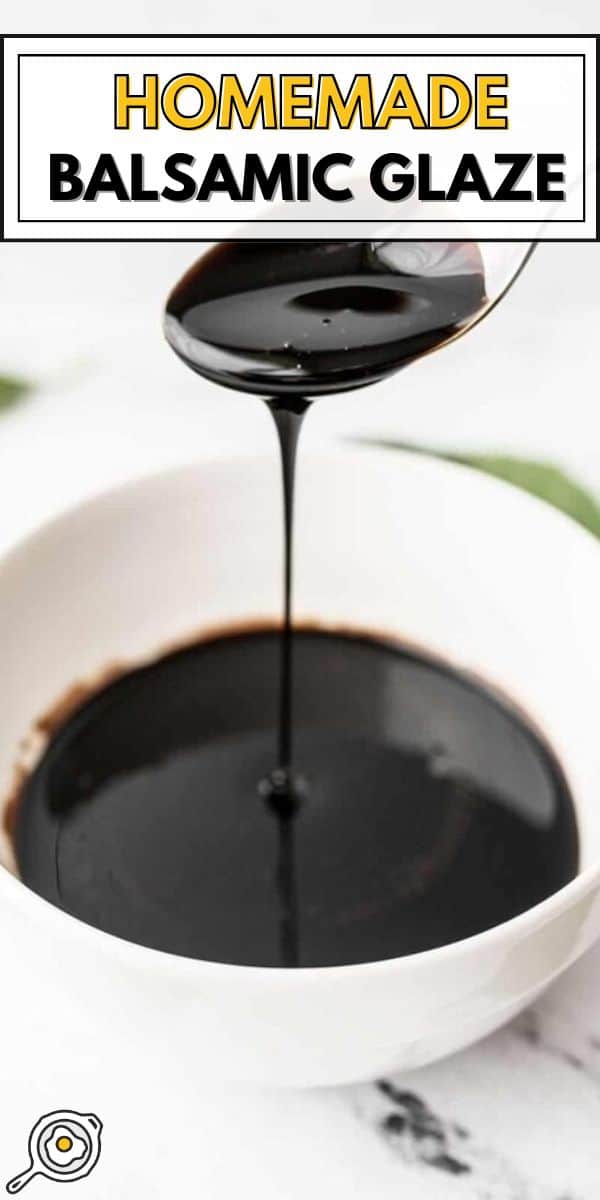
I try my hardest not to have 50 bottles of sauces and condiments in my fridge. Instead, I stock up on the basics and try to make my own sauces whenever possible. This simple balsamic glaze (or balsamic reduction) is SUPER easy to make at home, it only takes a few ingredients, and about 10 minutes. So it just makes sense to make homemade balsamic glaze whenever I need it instead of having that extra bottle cluttering up the fridge. Plus, a little drizzle of this sweet and tangy glaze will take any salad, grilled meat, or roasted vegetable (you’ve GOT to try it on roasted Brussels sprouts) to the next level!
 Pin this recipe for later!
All recipes are rigorously tested in our Nashville Test Kitchen to ensure they are easy, affordable, and delicious.
“This glaze is delicious! Made it 2 weeks ago and making another batch today. Love the tang factor!”
Michelle
A Glossy Balsamic Drizzle You’ll Want to Put on Everything
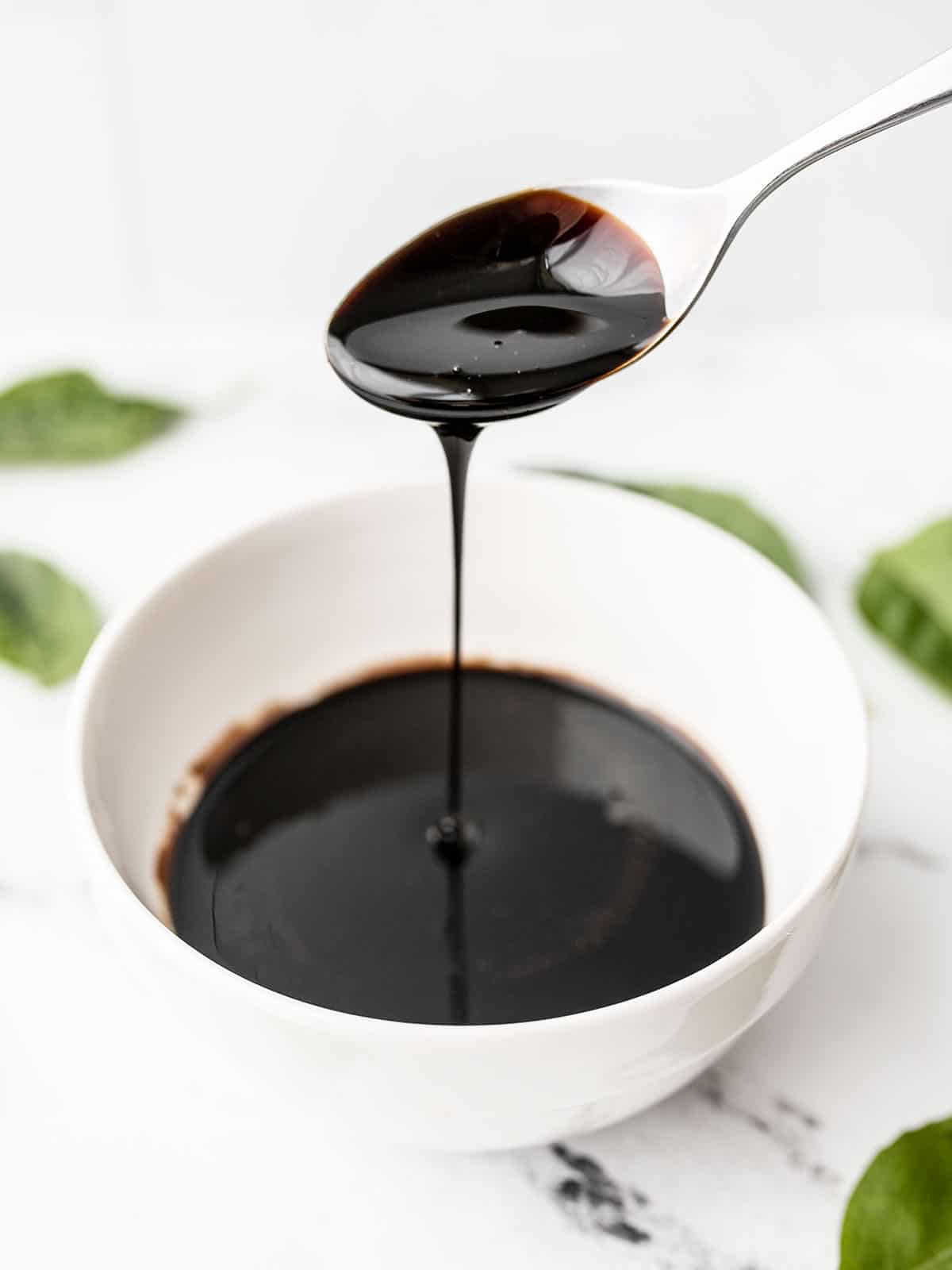
Balsamic glaze, sometimes called a balsamic reduction, is balsamic vinegar that has been simmered until most of the water has evaporated away, leaving a deliciously thick, syrupy glaze with a bold flavor. The best part is that you only need two simple ingredients to get there, which still blows my mind every time I make it! Balsamic vinegar is the base ingredient for this glaze, and brown sugar balances the acidity of the vinegar, giving it a smoother flavor.
This glaze is slightly sweet, tangy, super complex, and it tastes great drizzled over all roasted vegetables, grilled meat, pasta, pizza, and more. It is truly a magic bullet for making your food taste gourmet.
What Kind of Balsamic Vinegar to Use
You will want to buy at least a middle-range balsamic vinegar for this recipe because, as the vinegar is reduced, the flavor will intensify. If the flavor is not great to begin with, it will become worse when reduced. Look for a balsamic vinegar that is labeled “from Modena.” The color should be dark and not translucent. Avoid vinegars that list wine vinegar, caramel color, or other flavorings in the ingredients.
Tips for Making Balsamic Glaze
The process of making a balsamic glaze or reduction is quite simple, but if it’s your first time, here are some helpful tips:
- Use a small, heavy-bottomed pot. So the vinegar doesn’t reduce too quickly (this gives you more wiggle room before burning).
- Turn on your vent hood. Simmering vinegar can smell quite strong!
- Stainless steel or light in color. Use a pot that is stainless steel or light in color to allow you to see the color and thickness of the dark vinegar as it reduces.
- Use the lowest heat setting that keeps the vinegar at a gentle simmer. Having the heat set too high can cause it to reduce and burn too quickly. High heat can also cause the sugar to candy, which we definitely don’t want!
- Watch the vinegar closely. Stir often as it simmers to prevent it going too far or allowing the vinegar to burn.
- Thickens as it cools. Remove the glaze from the heat when it is still slightly thinner than you’d like because it will thicken as it cools.
- You can also add a pinch of salt to your glaze if you prefer. Depending on how I’m using it, I find that sometimes salt can help make it pop just a bit more. If you want your balsamic glaze to be extra rich, you can melt a tablespoon of butter into the glaze after simmering.
Homemade Balsamic Glaze
Cost $2.32 recipe / $0.58 serving
Ingredients
- 1 cup balsamic vinegar ($2.16)
- 1/4 cup brown sugar ($0.16*)
Video
Instructions
- Add the balsamic vinegar and brown sugar to a small saucepot. Stir to dissolve the sugar.
- Bring the mixture up to a simmer over medium heat. Reduce the heat to medium-low, then continue to simmer the mixture, stirring often, until it has reduced in volume by about half. This should take around ten minutes, but the total time can vary depending on your cookware, the burner, and batch size. You'll know it's done when the vinegar has thickened to the point where the simmering bubbles linger on the surface instead of immediately popping.
- Remove the glaze from the heat and allow it to cool. It will thicken considerably more as it cools. If it isn't to your desired thickness, you can simmer the glaze again to reduce it further. If the glaze is too thick, you can thin it with a small splash of water.
- Once cool, drizzle the glaze over your favorite foods and enjoy! Refrigerate leftovers until ready to use, or up to three weeks.
See how we calculate recipe costs here.
Notes
Nutrition Information
 Have you tried this recipe?Mention @budgetbytes or tag #budgetbytes on Instagram!
How to Make Balsamic Glaze Step-by-Step Photos
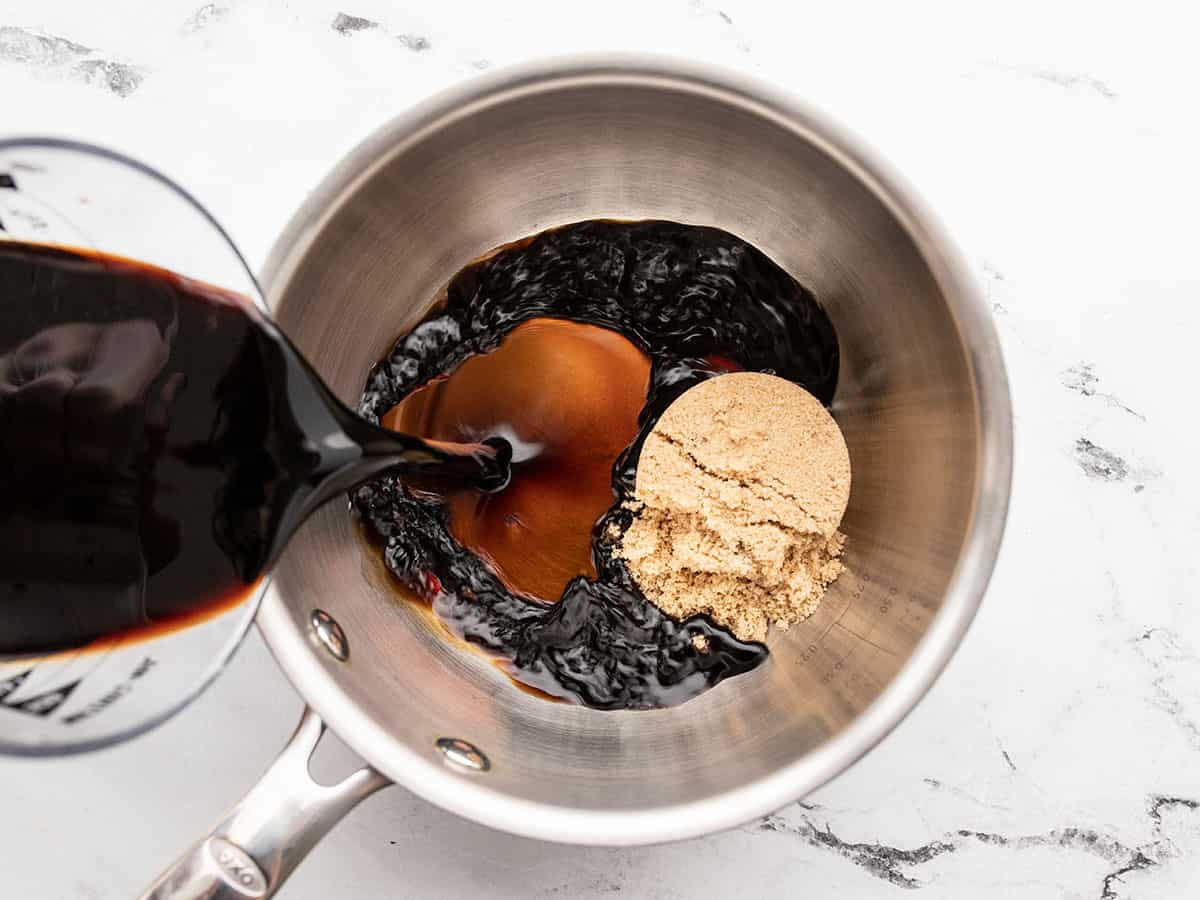
Combine ingredients: Add ¼ cup brown sugar and 1 cup balsamic vinegar to a small saucepot.
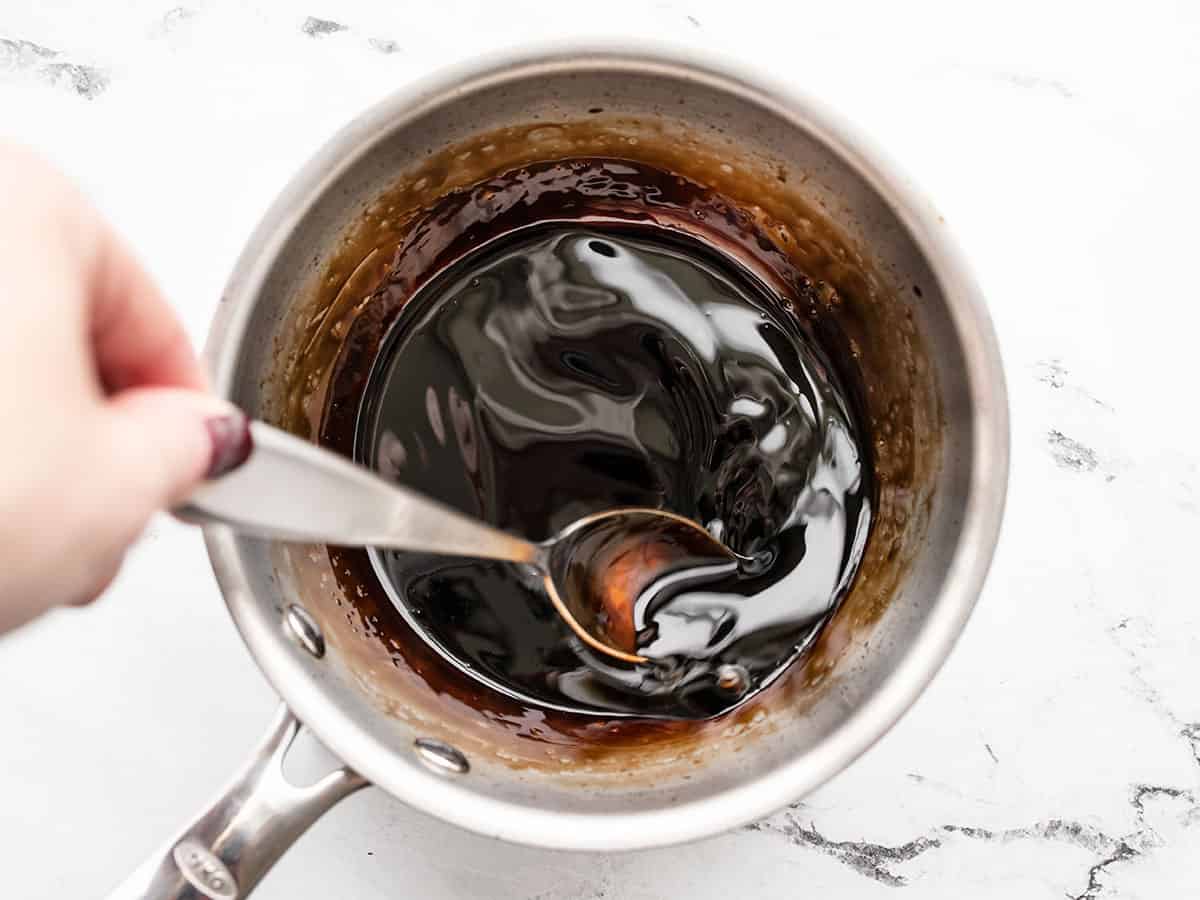
Simmer: Stir the vinegar to dissolve the brown sugar. Heat the mixture over medium, allowing it to come up to a boil. Reduce the heat to medium-low and continue to gently simmer, stirring often, for about 10 minutes, or until the mixture has reduced by half. You’ll notice that as the vinegar gets thicker, the bubbles from simmering take a little longer to pop on the surface.
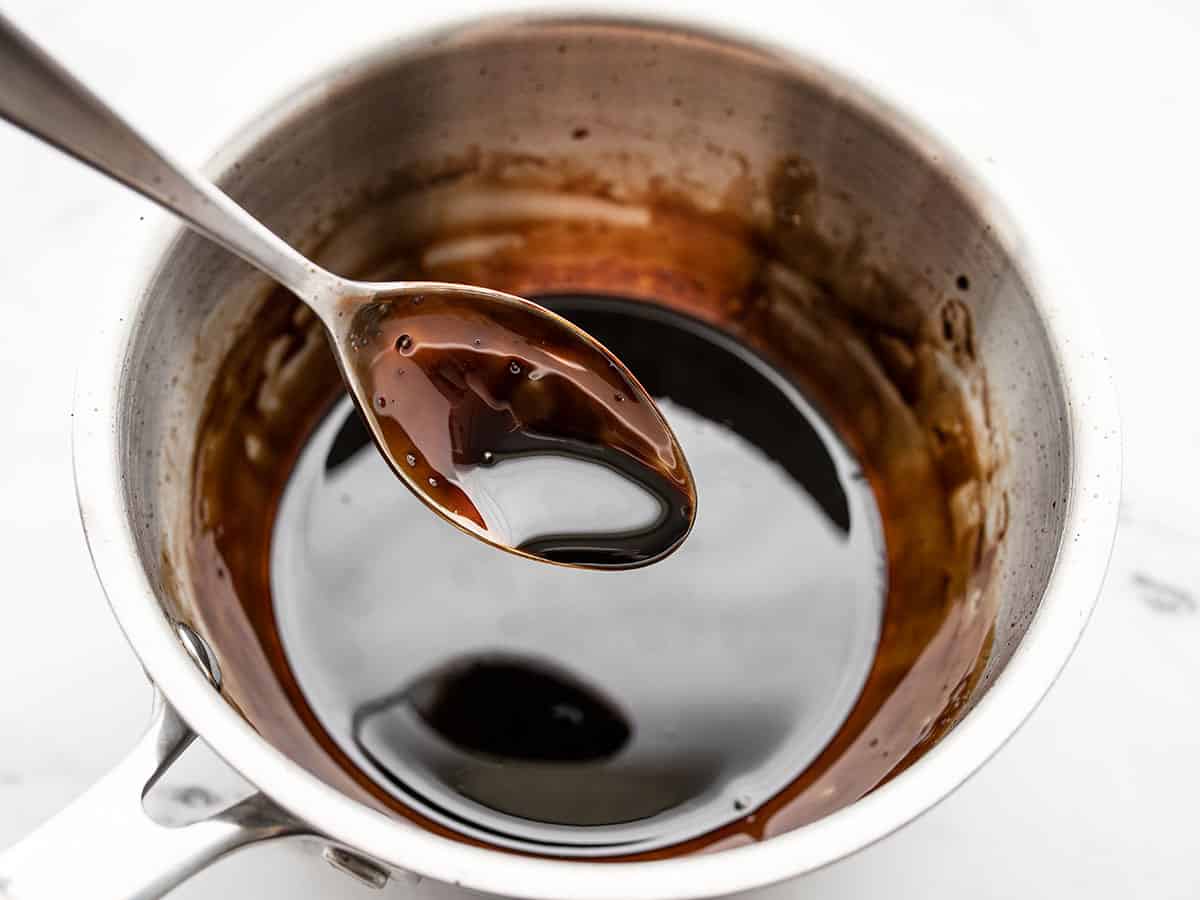
Cool: When the volume has reduced by half, remove the balsamic reduction from the heat. It will continue to thicken quite a bit as it gets closer to room temperature. If it doesn’t get as thick as you’d like, you can just simmer the glaze again.
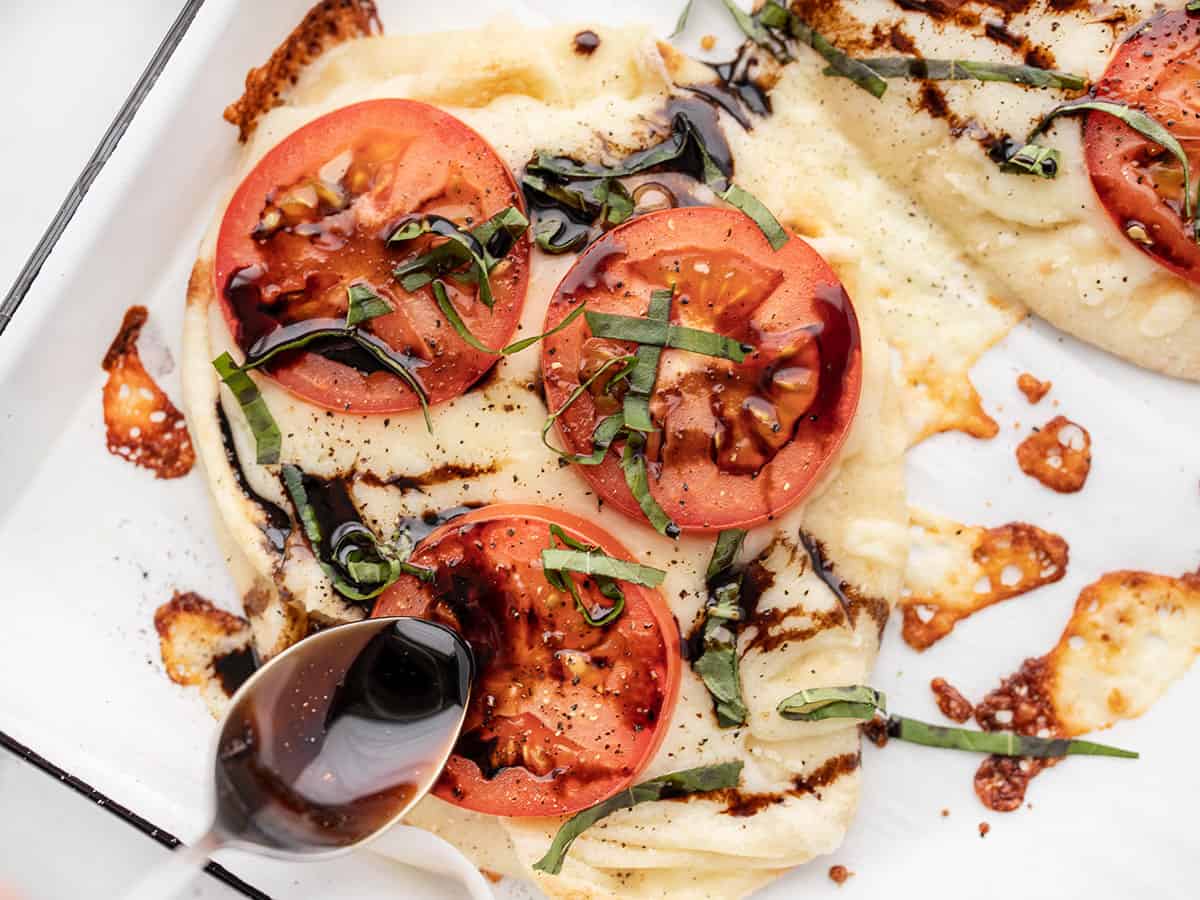
Once thickened, serve and enjoy! Pictured here with my easy caprese pizzas.
How to Use Balsamic Glaze
I always say balsamic reduction is the secret weapon you don’t realize you’re missing until you start using it. This sweet, tangy drizzle somehow works with just about everything. Here are my favorite ways to serve it:
- Meat: I love drizzling this glaze over roast turkey during the holidays! It’s also fantastic on herb-roasted pork tenderloin or even sliced steak or chicken tucked into a cozy grain bowl.
- Cheese: If you’re building a cheese board on a budget, balsamic glaze pulls everything together. Drizzle it over brie, fresh mozzarella, goat cheese, or sharp cheddar. Add a handful of crackers or sliced baguette, and it suddenly feels intentional, even if it came together in minutes.
- Appetizers: I like to spoon this glaze over bruschetta or crostini with ricotta for an easy appetizer. It’s also delicious alongside olives or cured meats, so everyone can add a little drizzle to their plate.
- Vegetables: Roasted carrots are a favorite in my house, but it’s just as good on Brussels sprouts (as I mentioned earlier) or any sheet pan vegetables you already have going in the oven.
- Salads: A Caprese salad is a natural fit, but even a simple green salad feels special with this glaze on top.
- Dessert: A light drizzle over frozen yogurt or vanilla ice cream is one of my favorite easy treats!
How to Store Leftovers
The great thing about this balsamic glaze recipe is that you can make it in the quantity that you need and avoid wasting ingredients or having to stock leftovers. But if you do find yourself with leftover balsamic glaze, simply let it cool to room temperature, then store it in an airtight container in the refrigerator for up to three weeks.




Pros – simple recipe, cons I ruined so much dish ware and a pot making this because it hardened immediately after I cooked it
Sounds like user error unfortunately.
The glaze was good … BUT why would this recipe take only 10 minutes to make as it says in the instructions? Who in the world could realistically make this in 10 minutes??? Seems most recipes give incorrect timing for making them. But this one is a joke. It took 1 hr and 30 min to cook the balsamic glaze down to half and then to cool it down. I had to speed up the cooling by putting it in the refrigerator. So aggravating when timing is very important.
Thank God it isn’t just me! I’m literally 40 minutes in and still not thick. I thought I was doing something wrong. I was about to dump it down the drain when I saw your review. Thank you!
Now I know how to make it! Delicious! Even though I have never tried it before. My sister sent me a pic of her salad with watermelon and feta and other stuff in it. I decided to search to see if I could make my own glaze… of course I already had the two ingredients.
Darling Beth, balsamic vinegar keeps for years, if not decades, without refrigeration, so does sugar; how come that a boiled-down mixture of the two only keeps for up to three weeks in the fridge?
Anytime you place ingredients in a pot, use a cooking utensil, and transfer it to a jar to store, you’re more than likely introducing bacteria somewhere along the way. That’s totally fine and normal, but it also means that there’s a good chance that it will cause the mixture to spoil at some point. It wouldn’t be smart for us to recommend keeping a homemade glaze indefinitely and risk someone getting sick. :)
Very shrewd answer indeed. Although the only bacteria likely to thrive in concentrated vinegar would be the ones who produced the vinegar in the first place. In the worst case scenario, the glaze would undergo secondary fermentation with the added sugar turning into alcohol (for added kick, as they say), then oxidising into acid.
Can I use granulated sugar instead of brown sugar
Yes!
Excellent! Easy to follow! Thank you
Can I use stevia instead of brown sugar?
Unfortunately, I don’t think it would have the same outcome!
Can I use dark brown sugar for this recipe?! Thanks in advance for your help! 😊
That’s fine!
If I substitute honey for the brown sugar, what measurement would you recommend? My auto-immune disease doesn’t allow me to consume regular sugar products, however honey or coconut sugar are acceptable. TY.
I would try 1 tbsp of honey!
Been looking for this recipe! Thanks!
This glaze is delicious! Made it 2 weeks ago and making another batch today. Love the tang factor!
Thank you so much for posting Osama Glazer so expensive so I bought a bottle a pretty decent balsamic vinegar and I had the brown sugar so I can make mini servings for a fraction of the cost by making it myself🙌
Delicious and so simple!
Could you use white balsamic vinegar? If so, any taste difference?
You could. The taste would differ as much (or as little) as white balsamic vinegar differs in taste from dark one.
Yummy. Thank you. Lovely recipe